
Google Display
Remarketing to those who already visited your website and presence on your industry’s portals, with exclusions that protect the budget. Now inside Demand Gen, which replaces the Display campaign.
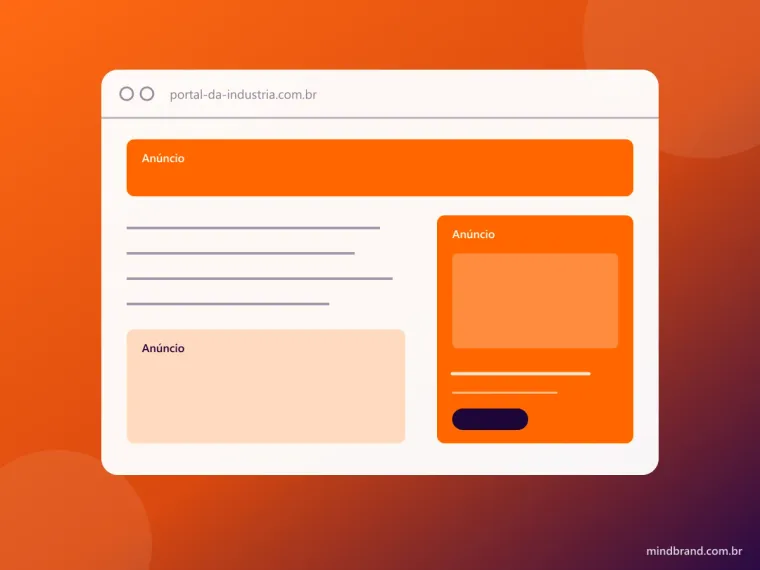
Display in B2B is not for selling on the first click.
Those who buy B2B research, compare, disappear and come back weeks later. The Google Display Network puts your brand on the sites, portals and videos that this buyer reads while deciding, and brings back those who already visited your website.
In 2026, Google began moving Display campaigns into Demand Gen, with voluntary migration since June and automatic migration afterward. We take care of the structure, the exclusions, the migration and the measurement, so Display works together with Search and doesn’t become a cost without a trail.
When Google Display enters the plan.
Visitor who disappears
Many people visit the product and quote pages and leave without talking to sales. Remarketing brings that person back.
Long sales cycle
The decision takes weeks or months. Display keeps your brand present while the buyer compares.
Brand little known in the industry
Being on the portals, trade magazines and sites your buyer reads builds recall before the search.
Old Display with no control
Campaign running on apps and games, accidental clicks and no contacts. The problem is usually exclusion, not budget.
Campaign that needs to migrate
The migration to Demand Gen can’t be undone and the ads go through approval again. It is worth planning before the automatic one.
When it doesn’t fit
With no website traffic for remarketing, with a very small budget or as the only source of new contacts, Display yields little. In those cases, we tell you beforehand.
From the account audit to the report.
Audit of the current account
Where the ad is appearing, how much goes to apps and accidental clicks, and what can be recovered.
Migration to Demand Gen
Planned, with ad review, only the Display Network on at first and a before-and-after comparison.
B2B audiences
Remarketing of key pages, customer list split by CRM stage, custom audiences and lookalikes of those who bought.
Placements and exclusions
Portals and magazines from your industry kept; apps, games and unrelated content excluded, with weekly review.
Creatives to Google’s standard
Images in the four aspect ratios, logo, headlines and descriptions within the Demand Gen limits, with no overlaid text.
Landing page
A page that picks up the ad’s subject right above the fold, with a single call to action.
Consent for remarketing
Cookie notice with an advertising option, Google Consent Mode and a privacy policy citing Google (LGPD, Brazil’s data protection law).
Conversions and CRM
Main event and light event configured, standardized UTMs and the contact tracked through to sales.
Report together with the media
Display side by side with Search, LinkedIn Ads and ChatGPT Ads: qualified contacts, not impressions.
Structure before budget.
- 01
Diagnosis
Current account, website traffic, consent, conversions and the role of Display in your funnel.
- 02
Structure
Audiences, exclusions, creatives, landing page and the migration to Demand Gen.
- 03
Pilot
Starts with remarketing, with a controlled budget and only the Display Network on.
- 04
Optimization
Weekly review of placements, creatives and bids, and the decision to expand to other channels.
What changes in Google Display in 2026
We wrote a complete guide. Go straight to the passage that answers your question:
Display works before and after the search. Not instead of it.
We treat Display as part of the media, together with Search, LinkedIn and ChatGPT Ads, and we measure by what reaches sales. Remarketing without consent and campaigns without exclusions are not part of the plan.
Frequently asked questions
How much does it cost to advertise on Google Display?
The media budget goes straight to Google and is separate from the agency fee. The cost comes from the auction and depends on the audience, the competition and the ad. For bidding by target CPA (cost per acquisition), Google recommends a budget of at least 10 times the target CPA; that is why, in B2B, we usually start with a controlled-budget remarketing pilot.
Does Google Display still exist?
The Display Network remains. What changes is the campaign: since May 2026, Google has been moving Display into Demand Gen, with voluntary migration since June, automatic afterward and completion expected by 2027.
Am I required to migrate to Demand Gen?
Over time, yes: campaigns that aren’t migrated will be migrated automatically. The migration can’t be undone and the ads go through approval again, so we prefer to plan and migrate at a chosen moment.
Does Google Display work for B2B companies?
It works best as remarketing to those who visited the website and as presence on industry portals, with well-done exclusions. As the main source of new contacts, it usually yields less than Search.
How do you avoid clicks from apps and games?
With exclusions of app categories, content and placements, reviewed every week. It is the point where the most budget is lost in Display, and it is the first thing we look at in an account.
What is the difference between Display and Performance Max?
In Display (inside Demand Gen) you choose the channels, the audiences and the exclusions. In Performance Max, Google’s automation distributes the budget across all channels, which works better when there are already conversions in volume for it to learn from.
Do you work with Taboola, Teads or Criteo?
Yes, within the advertising and paid media service, when they make sense for the case. The Microsoft Audience Network, which allows targeting by LinkedIn data, is also a display alternative for B2B in Brazil.
Let’s talk about Google Display?
Fill in the form and we will get back to you to understand where you are.